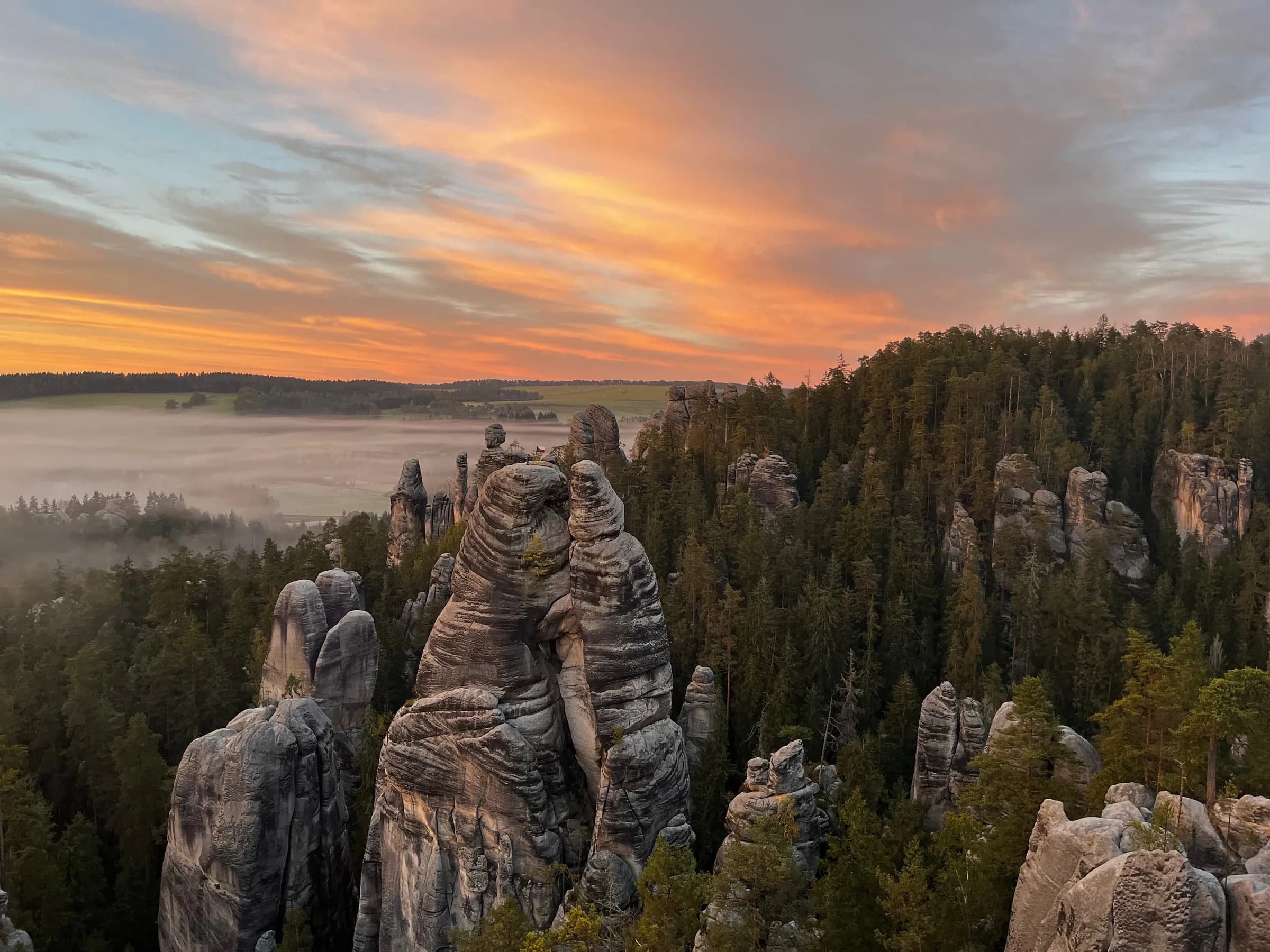
Sandstone towers rising above the forest at sunset, with mist over the valley behind

Sandstone climbing course

Knots, cracks and towers: step into the world of Czech sandstone with a PZA-certified instructor.

5,0 on Google
Duration3 days
AreaCzech sandstone
Group3 people / instructor
LevelUIAA VI and up
PriceOn request
Choose a date
Course priceOn request
Choose a date

About the course

A completely different world

For the average sport climber, traditional sandstone climbing is a completely different, almost abstract world. Thousands of towers that are hard to find your way around. Strict ethics that forbid chalk, top-roping, metal nuts and cams. New routes opened only from the ground up, with sparingly placed rings. And cracks everywhere, in every size.

It's paradise for climbers who love this style of climbing. World-class areas lie just a few hours' drive from Poland's biggest cities.

The barrier to entry is high: you need to learn to protect with knots and how to move in cracks. With us, you'll get there. You'll get to know the area and learn to find your way around it. We'll show you which techniques to use in cracks of different widths and how to protect yourself properly and relatively safely.

You'll find it's not as scary as it looks. And once you've got the hang of it, no Tatra chimney, Alpine crack or even a Yosemite offwidth will frighten you.

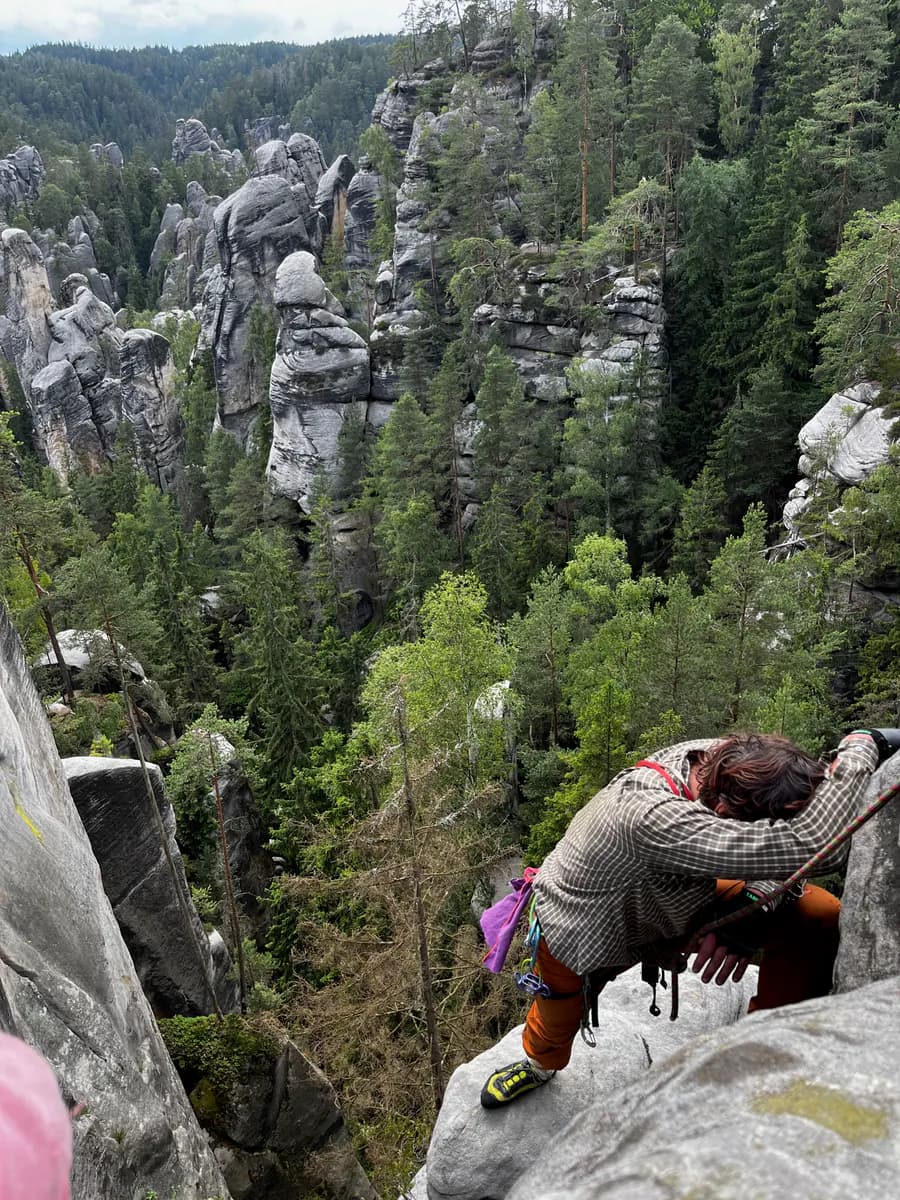
A climber on the summit of a sandstone tower, with the forest and a maze of rock towers below
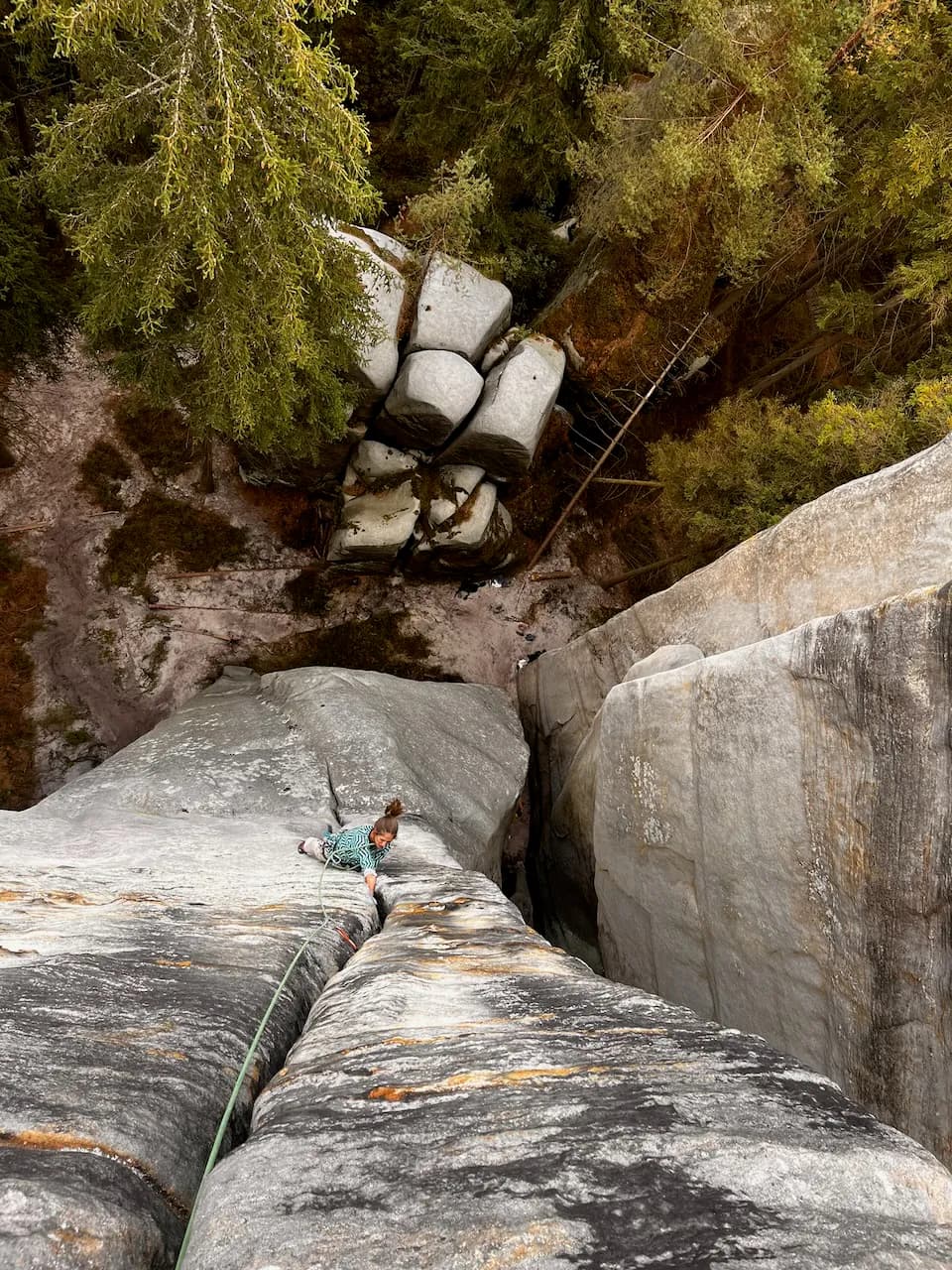
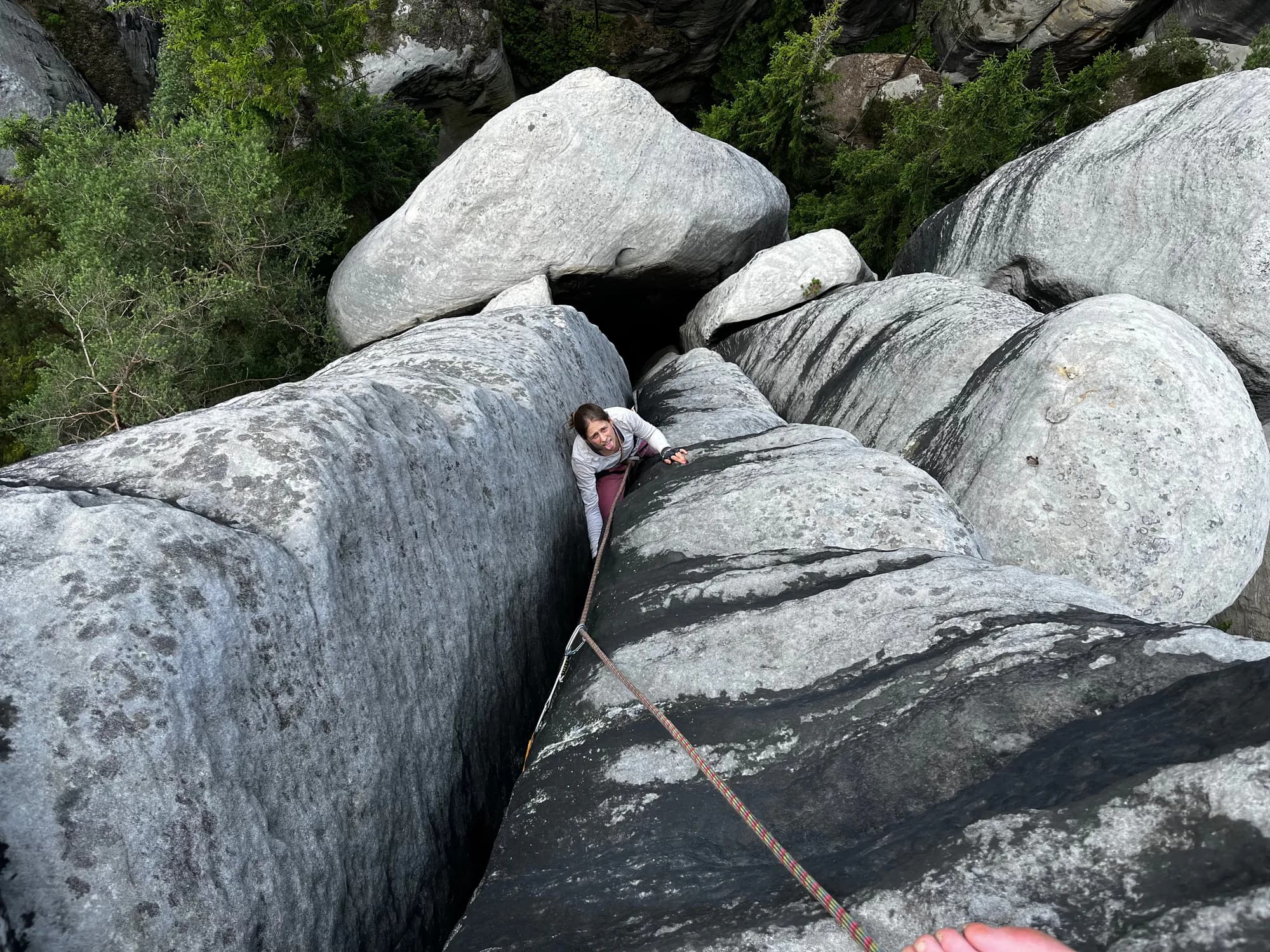
A student climbing a wide sandstone crack, seen from above with the forest below

Who it's for

For climbers who want to discover sandstone

This course is for you if:

You lead sport routes and want to try something completely different.

You've done a trad climbing course and want to take on the most demanding kind of trad.

You're preparing to climb in the mountains (the Tatras, the Alps) and want to improve your crack and chimney technique.

You've already been to the sandstone, but without someone experienced at your side you lacked confidence.

Requirements

  • Leading sport routes on your own at grade VI on the UIAA scale (around 5c/6a French) or harder.
  • Some trad climbing basics are welcome.
  • An open mind: on sandstone, protection can be far apart and rings are few.

Syllabus

Course syllabus

A sample three-day plan: from learning to tie knot protection on the ground to climbing cracks and chimneys to the summits of the towers.

Three days of trainingWe adapt the order of the sessions to the weather and the group's pace
Czech sandstoneWe choose the area based on the conditions, the season and the group's level
  1. 01
    Getting to know the area

    Rules and ethics, a gear check, learning to place knots and slings on the ground. First easy routes seconding the instructor: removing and assessing the protection.

  2. 02
    Cracks and chimneys

    Crack technique in different widths. Chimneys and off-widths. Leading easy routes with the instructor belaying.

  3. 03
    Leading (optional)

    For those who want to: leading routes on your own protection. Anchors and abseiling from the summits. Navigating with a guidebook.

Skills

What will you learn?

Protection in sandstone

  • Placing knots
  • Sling runners on threads, hourglasses (“hodiny”) and chockstones
  • Judging the quality of protection in soft rock and protecting the rock from damage
  • Anchors, clipping rings, abseiling from the summits of the towers

Crack technique

  • Finger, hand, fist and foot jams
  • Off-widths and chimneys: stacks, knee jams, chicken wings, back-and-foot
  • Taping your hands and choosing shoes

The area and its ethics

  • Local rules: no chalk, no metal in the rock, no top-roping, no climbing after rain (wet sandstone crumbles)
  • Reading guidebooks and topos, finding your way in the maze of towers
  • The Czech grading scale (UIAA vs. the sandstone scale)
  • Signing summit registers and local customs
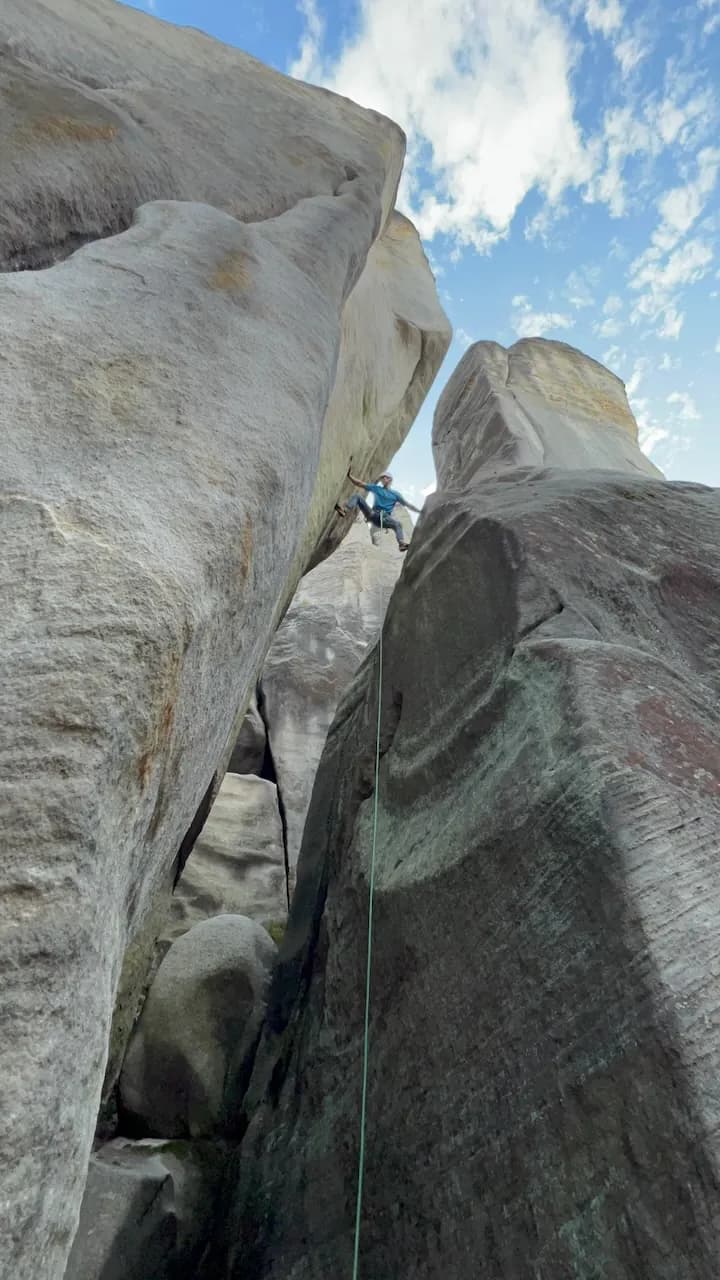
A climber bridging between two sandstone towers
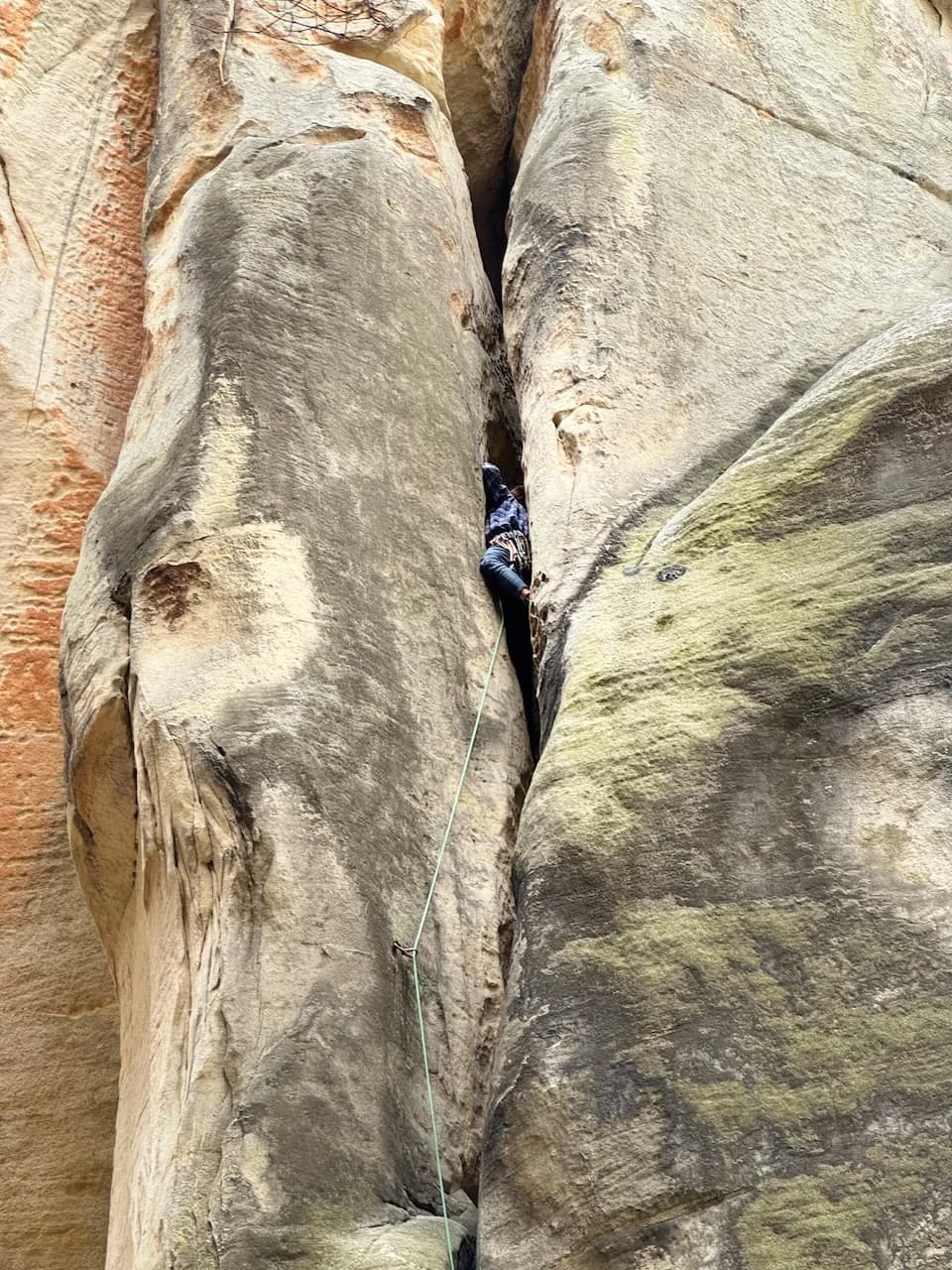
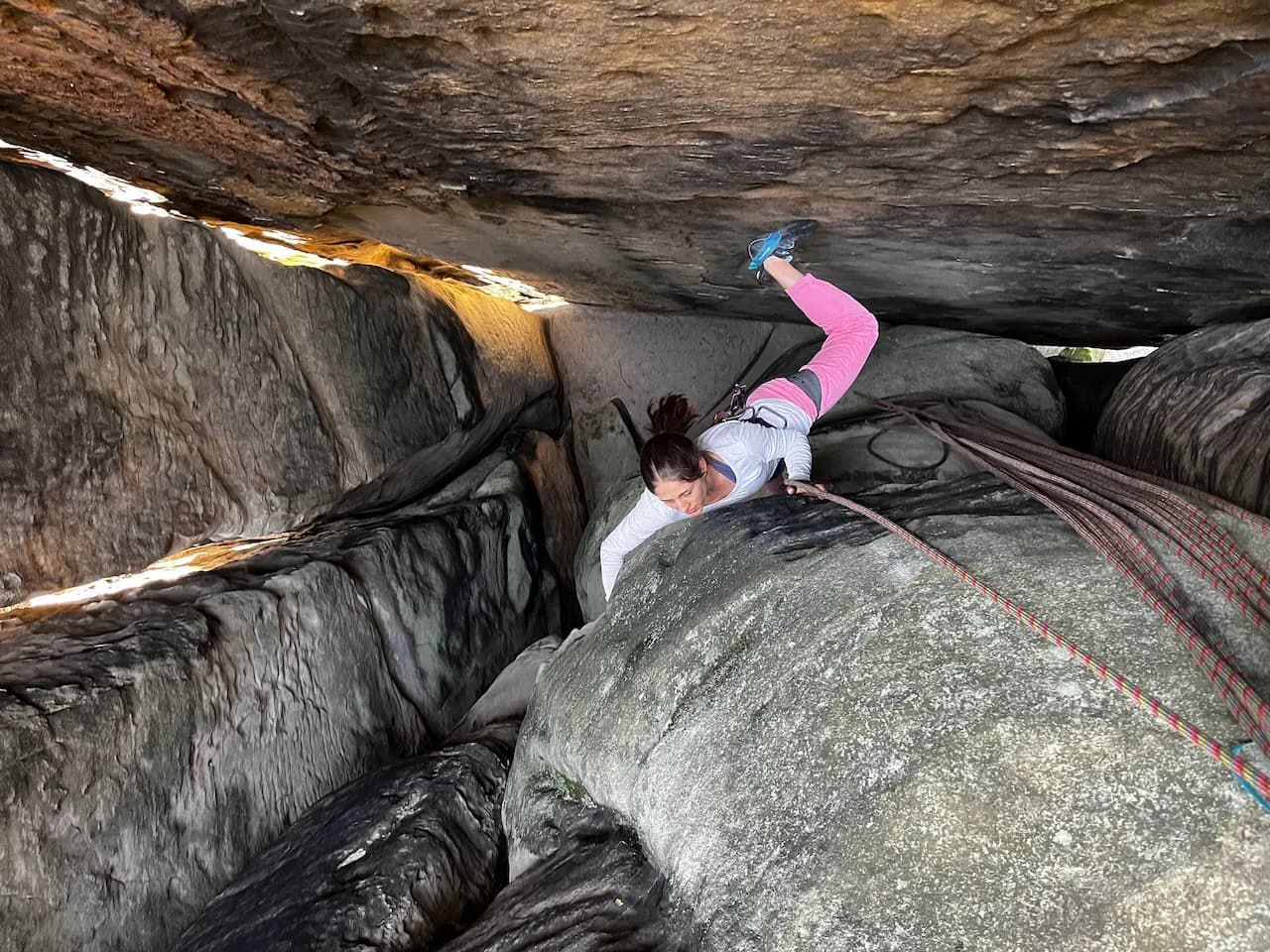
A climber in a narrow chimney between sandstone walls
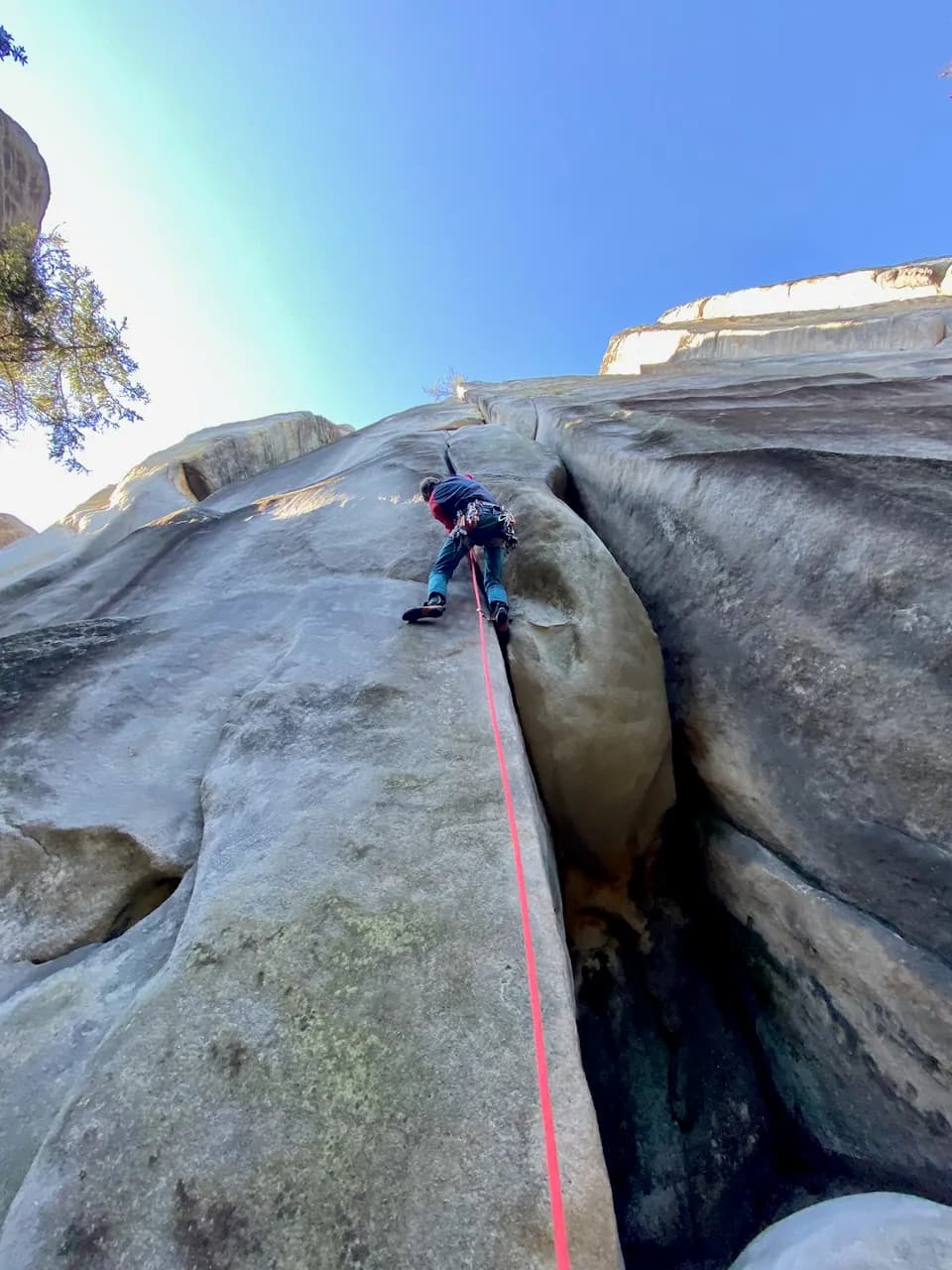
A climber leading a sandstone crack, seen from below
A student climbing a narrow chimney between rounded sandstone blocks, seen from above
Czech sandstone

Location

Where do we climb?

World-class climbing areas in the Czech Republic, a few hours' drive from Poland's biggest cities. We choose the area based on the conditions, the season and the group's level.

  • Adršpach
  • Teplice Rocks (Teplické skály)
  • Ostaš

On site

Accommodation and food
Not included in the course price. Before the trip we're happy to recommend tried-and-tested places to stay close to the area.
Fees and insurance
You pay entry and parking fees on site. Insurance that covers climbing abroad is required.

Gear

What gear you need

We provide the gear for protecting in sandstone during the course. You bring the rest.

Included

Three days of training with a PZA-certified instructor and training gear.

Knot slingsSlings and loopsRopesHelmetsA cheat sheet of knots and crack techniques

Leave your chalk at home: it's banned in most areas.

Bring with you

Climbing shoesrequiredIdeally comfortable ones you can jam your feet in cracks with.
Harness and belay devicerequired
Climbing tape or crack glovesrequiredThey protect your hands when jamming.
Long trousers and a long-sleeved topfor chimneys
Head torch

Booking

Dates

The best seasons are April–June and September–October. Sandstone needs a few dry days, so if the forecast is bad we may move the date.

0 available dates

No dates available right now. Get in touch — we'll gladly find a date that works for you.

Want to come with your partner or your own crew? We also run private group courses and days with an instructor. Get in touch

Reviews

What our students say

Reviews from our Google Maps listing, in the original Polish.

5.031 reviews
„Kurs skałkowy z Pawłem to świetny wybór. Profesjonalne podejście, dużo cennych wskazówek i wiedzy przekazanej krok po kroku. Wszystko odbywa się w przyjaznej atmosferze, a Paweł z dużą cierpliwością odpowiada na każde pytanie. Zdecydowanie polecam!”
Matilde Anselmo
„Szczere podziękowania dla instruktora Pawła. Dużo nowej i przydatnej wiedzy przekazanej w pozytywnej atmosferze. Polecam serdecznie :)”
Jan Nowak
„Jestem po kursie skałkowym u Szymona. Profesjonalne podejście, ogromna wiedza, pasja do wspinania, a równocześnie bardzo przyjazna atmosfera i reagowanie na potrzeby naszej grupy. Polecam każdemu kto chciałby spróbować swoich sił w skałach :)”
Marek Warzeszka

FAQ

Frequently asked questions

Can't find your answer here? Give us a call — we're happy to help.

Talk to an instructorWe'll help you pick the right course and date.
Is sandstone climbing dangerous?

It takes more care than sport climbing: protection is sparser and its quality depends on you. That's why we start by practising protection on the ground and on easy routes, and only then gradually raise the difficulty.

Why can't you use nuts and cams on sandstone?

Sandstone is soft. Metal damages the cracks and breaks the rock. Knots and slings protect the rock, and when placed well they hold a fall.

Why do you climb sandstone without chalk?

Chalk clogs the pores of the sandstone, making the rock slippery and slower to dry. It is banned in most areas.

I've done a sport climbing course. Can I manage the sandstone course?

Yes, if you lead sport routes. A trad course helps, but it isn't required.

Can I join the sandstone course with a partner or my own group?

Yes. We also run private group courses and days with an instructor.

Next step

It's not as scary as it looks

Sign up and find out that sandstone could become your favourite climbing area.