
The Jura (Kraków-Częstochowa Upland)
Tried-and-tested crags near Kraków — ideal for learning self-rescue techniques in natural terrain.
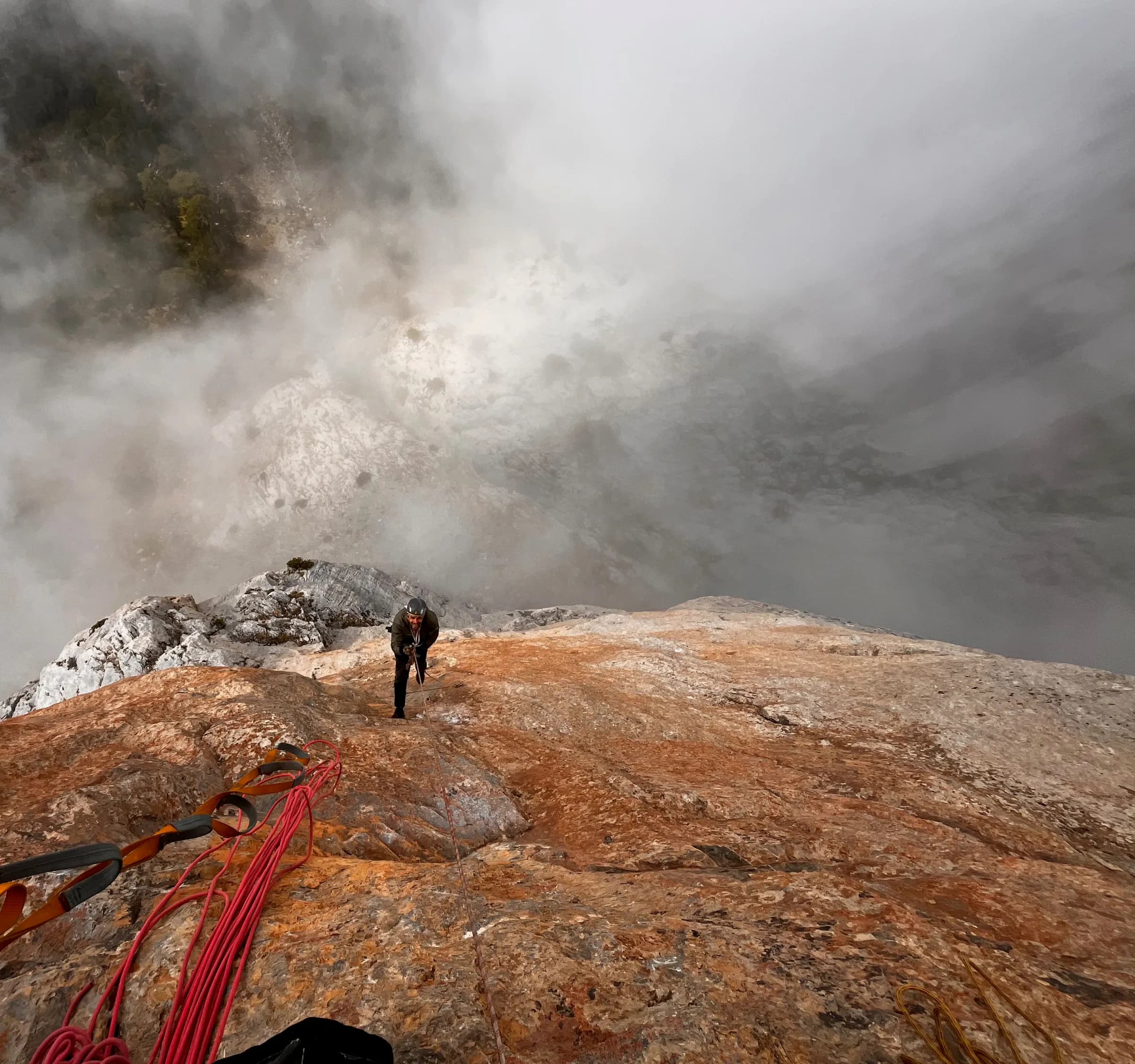
Knowledge we hope you'll never need for real. But if you need it even once, it's worth having. Could you lower an injured partner? Or abseil on a damaged rope?
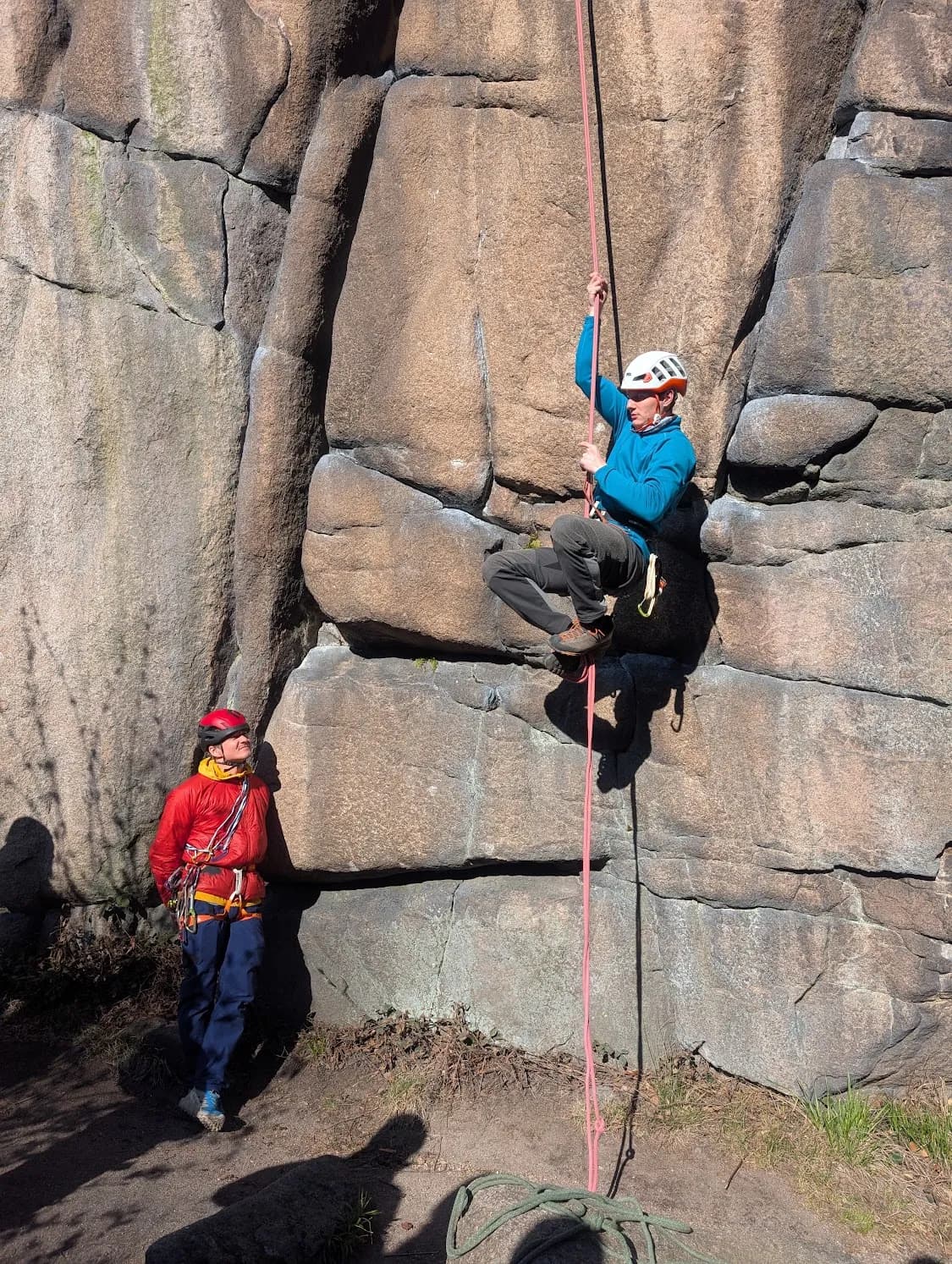
Who it's for
This course is for you if:
You climb multi-pitch routes and are confident with rope work.
You want to learn or refresh the key self-rescue skills.
You want to feel safer in areas where mountain rescue is limited or doesn't exist at all.
You want to be a self-sufficient climber who doesn't depend on more experienced partners.
This course is not for beginners. If that's you, start with our beginner course lub trad climbing course.
Syllabus
Over two days of intensive training you'll learn techniques that let you and your partners get out of an emergency on the rock if you ever need to.
The most important part of the course is the simulated emergencies, where you'll have to use what you've learned under the instructor's eye.
Location
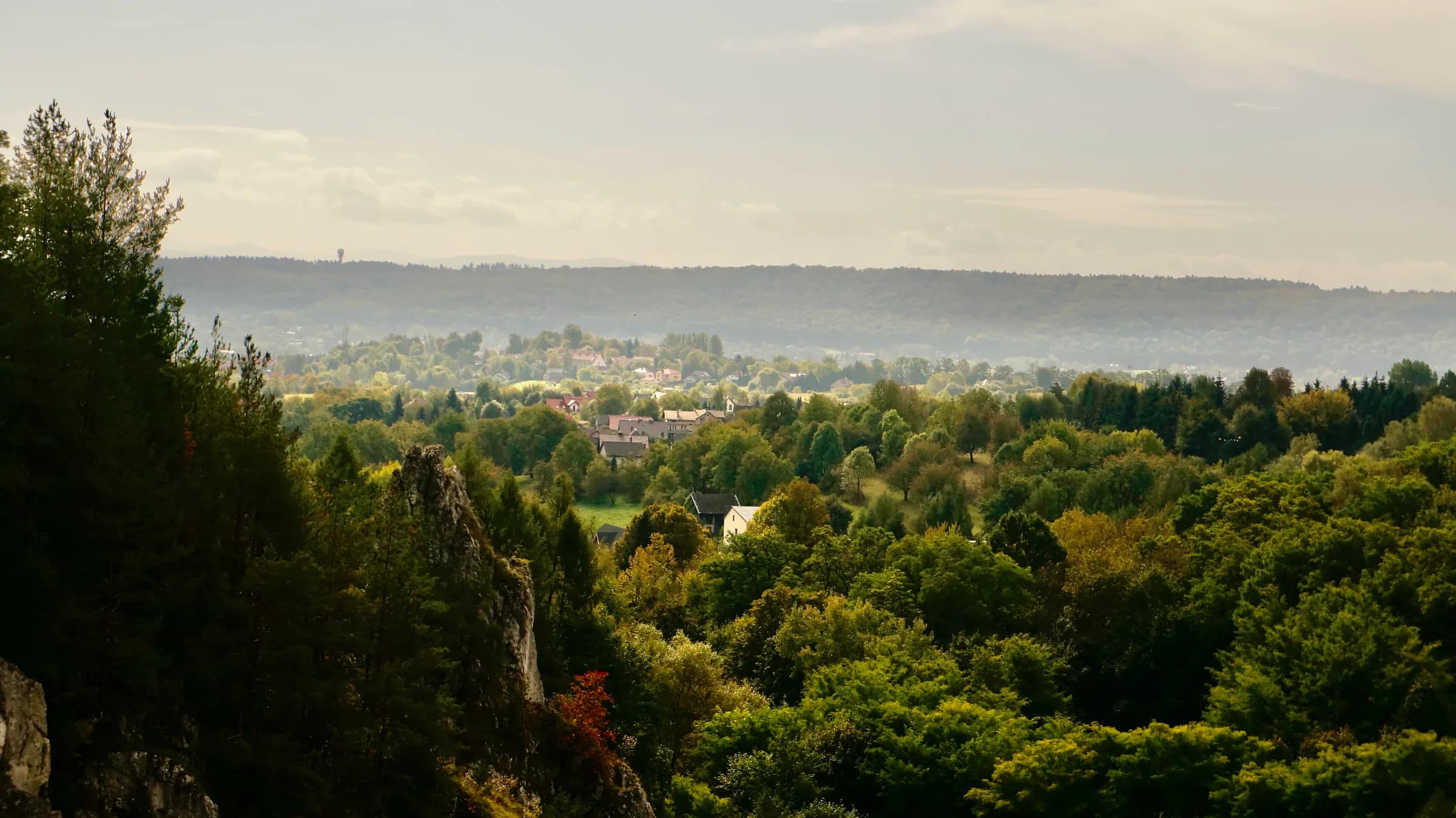
The course can take place in the Jura (the Kraków-Częstochowa Upland), in the Rudawy Janowickie (Sokoliki) or at any crag or climbing wall of your choice — although these skills are best practised on real rock.
Tried-and-tested crags near Kraków — ideal for learning self-rescue techniques in natural terrain.
Granite crags in Lower Silesia with multi-pitch routes — a great setting for practising in conditions close to the mountains.
We can run the course at a crag or climbing wall of your choice — get in touch and we'll sort out the details.
Gear
Bring your own multi-pitch kit — we'll provide anything that's missing.
Anything from the “Bring with you” list that you don't have.
Booking
No dates available right now. Get in touch — we'll gladly find a date that works for you.
None of the dates work for you? We'll arrange the course on a date of your choice. Get in touch
Reviews
Reviews from our Google Maps listing, in the original Polish.
„Kurs skałkowy z Pawłem to świetny wybór. Profesjonalne podejście, dużo cennych wskazówek i wiedzy przekazanej krok po kroku. Wszystko odbywa się w przyjaznej atmosferze, a Paweł z dużą cierpliwością odpowiada na każde pytanie. Zdecydowanie polecam!” Matilde Anselmo
„Szczere podziękowania dla instruktora Pawła. Dużo nowej i przydatnej wiedzy przekazanej w pozytywnej atmosferze. Polecam serdecznie :)” Jan Nowak
„Jestem po kursie skałkowym u Szymona. Profesjonalne podejście, ogromna wiedza, pasja do wspinania, a równocześnie bardzo przyjazna atmosfera i reagowanie na potrzeby naszej grupy. Polecam każdemu kto chciałby spróbować swoich sił w skałach :)” Marek Warzeszka
FAQ
Can't find your answer here? Give us a call — we're happy to help.
No. Your instructor provides all the climbing gear you need to get started, including a harness, helmet, rope and belay device.
We don't provide climbing shoes, which you can't climb on rock without, so bring your own!
If you have some gear of your own, bring it along. That way you'll get to know the kit you'll keep using after the course.
We run our courses mainly in the Kraków-Częstochowa Upland (the Jura) and in the Rudawy Janowickie range in Lower Silesia.
The location depends on the course. More details here.
Yes, as long as you follow the safety rules we go through before we start.
Our courses are run by certified instructors, and your safety is their priority. On rock there is always some risk of events beyond our control, such as falling rocks or other people.
Accidents are, however, extremely rare.
The minimum age depends on the course.
For rock climbing courses the minimum age is 16, with written consent from a parent or guardian. We accept younger participants only in exceptional cases and arrange sessions for children individually — please get in touch.
There is no upper age limit for adults.
Groups are small, usually 2 to 4 people. That way the instructor can give each participant individual attention.
Bring with you:
In spring and autumn a flask of tea, gloves and a thin hat that fits under a helmet also come in handy.
In summer, bring tick repellent and sunscreen.
Light rain or cold weather doesn't always mean the day is cancelled. The areas where we climb are often large, and the microclimate can change within a few kilometres, which gives us room to manoeuvre when conditions are poor.
We always choose the crag to make the most of the weather.
If conditions are very bad, we move the session to a climbing wall.
Of course. Many people sign up on their own and join a group, or take the course one-to-one (after arranging it with an instructor).
Yes — independence is the main goal of the course. You learn safe belaying and the basic procedures that let you climb on your own.
Yes. Our climbing courses are also available as gift vouchers!
Just send us an email and we'll prepare a voucher for the course of your choice.
The price includes instruction (7–9 hours a day) and all the gear you need. It does not include transport, food or accommodation.
Choose a course on the Courses page, pick a date and fill in the booking form. You'll also find all available dates on the booking page.
If you have any questions, get in touch by phone or email.
Next step
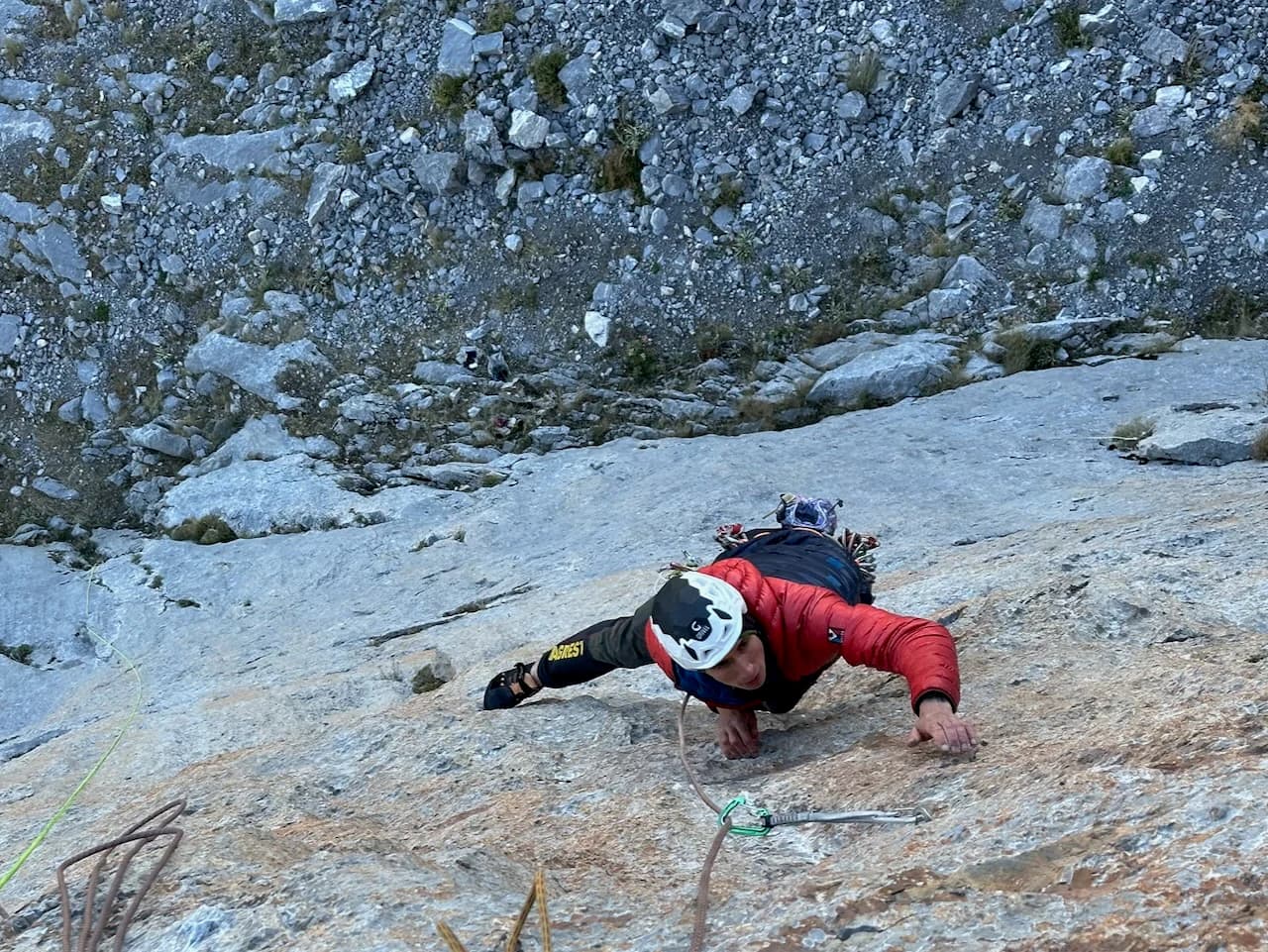
Get in touch — we'll help you pick a date, tailor the syllabus to your needs and answer all your questions before you book.